
Description
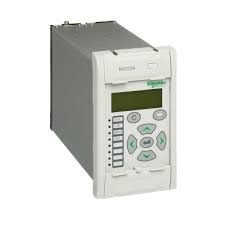
Schneider MiCOM P121
When electrical faults strike a power system, the difference between a minor disruption and a catastrophic failure often comes down to milliseconds. The MiCOM P121 overcurrent protection relay is engineered precisely for those critical moments — delivering fast, accurate, and dependable protection for medium voltage networks, feeders, and distribution systems where reliability is not optional.
Modern power networks face increasing complexity. Utilities, industrial facilities, and infrastructure operators need protection devices that can detect abnormal current conditions instantly and isolate faults before they cascade into wider outages or equipment damage. The MiCOM P121 addresses this challenge directly, offering a self-contained, three-phase overcurrent and earth fault protection solution built to perform in demanding real-world environments. Rather than relying on aging electromechanical relays or oversized multifunction units for straightforward protection tasks, the P121 gives engineers a focused, cost-effective tool that does exactly what is needed — without unnecessary complexity getting in the way.
At the core of the Schneider MiCOM P121 is its overcurrent and earth fault protection capability, covering both definite time and inverse time operating characteristics. What this means for the customer is flexibility. Whether your application calls for a fixed trip delay to coordinate with upstream protection devices or an IDMT curve that responds proportionally to the severity of the fault, the Schneider MiCOM P121 accommodates your coordination strategy. This adaptability reduces the risk of nuisance tripping while ensuring genuine faults are cleared quickly — protecting both equipment and continuity of supply.
The relay supports multiple IDMT curve shapes, including Normal Inverse, Very Inverse, and Extremely Inverse, as well as the IEC and IEEE standard curve families. For the engineer designing a protection scheme, this means the P121 can be matched precisely to the characteristics of the upstream and downstream devices in the network. Proper coordination is the foundation of selective protection, and the P121 gives you the tools to achieve it without compromise. Miscoordination is one of the most common causes of unnecessary outages, and having the right curve options eliminates that risk.
The Schneider MiCOM P121 is housed in a compact, robust case suitable for panel mounting, and it features a clear local user interface with LED indicators and a straightforward setting interface. For maintenance teams and commissioning engineers, this translates to faster setup, easier testing, and reduced time on site. Settings can be applied and verified without specialist software tools, which matters enormously when you are working under time pressure during a commissioning schedule or a fault investigation. Clear indication of relay status and fault records also supports rapid post-fault analysis, helping operators understand what happened and restore supply with confidence.
The relay is designed for use across a wide range of applications including primary and backup protection of overhead lines, underground cables, transformers, and bus sections in medium voltage switchgear. It is equally at home in utility distribution networks and private industrial power systems. Whether you are protecting a substation feeder, a factory supply transformer, or a ring main unit, the P121 delivers consistent, standards-compliant protection that meets the expectations of modern power system engineering.
Built to IEC standards and backed by Schneider Electric’s global support network, the MiCOM P121 is a relay you can specify with confidence, install with ease, and trust to perform when it matters most. For protection engineers who need a reliable, proven overcurrent relay without the overhead of unnecessary features, the P121 represents exactly the right balance of capability, simplicity, and dependability. Protect your network. Protect your assets. Choose the MiCOM P121.

Reviews
There are no reviews yet.